




Let’s be real for a second. Most people don’t need a “perfect” business idea. They need one that actually fits their life.
Low investment. Low risk. Something you can start after work, on weekends, or during that weird two hour window when the house is finally quiet.
And yes, you can start an online business with almost no money. But. You still pay in other ways.
Time. Focus. A bit of discomfort. Some trial and error you cannot skip.
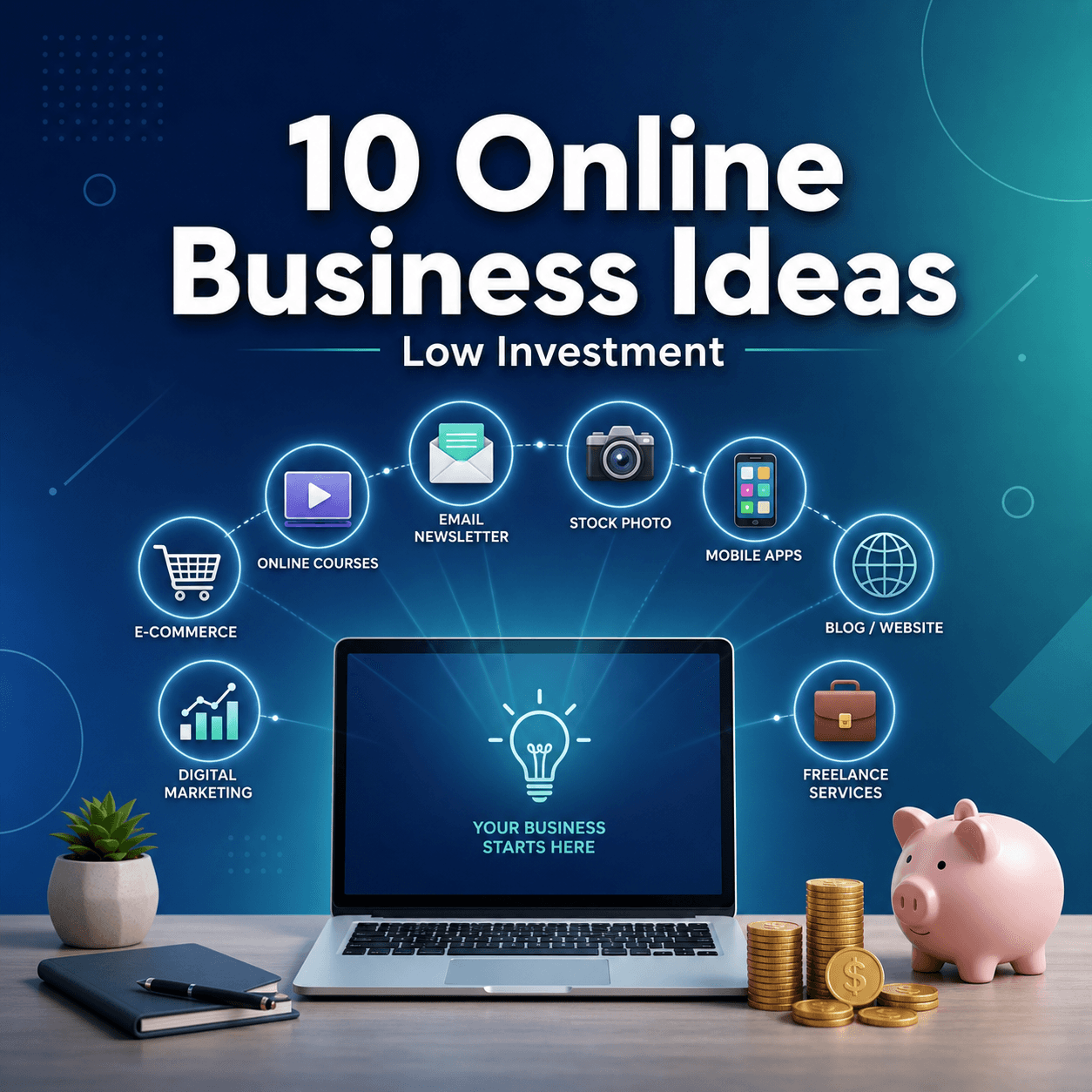
So here are 10 online business ideas that genuinely work with low upfront cost. Not fluffy stuff. These are things normal people are doing right now.
1. Freelance Service Business (Writing, Design, Video Editing, Admin)
This is the simplest “online business” to start because you do not need inventory, a website, or a product.
You just need one skill people already pay for.
And you would be shocked how many businesses need basic help that they just do not have time for.
Some examples that sell fast:
- Blog writing or newsletter writing
- Resume and LinkedIn profile rewrites
- Thumbnail design for YouTubers
- Short form video editing for Reels and TikTok
- Podcast editing
- Simple WordPress fixes
- Virtual assistant work (email, scheduling, research)
Low investment setup: a laptop, internet, and maybe a $15 to $30 per month tool depending on what you do.
Where people get stuck is they try to sell “I can do anything.” That is the fastest way to get ignored.
Pick one clear offer, one clear customer type. Like “video editor for real estate agents” or “VA for coaches.” Narrow is good. It makes you easy to hire.
Where to start:
- Upwork, Fiverr, Contra
- Cold outreach to small businesses
- Local businesses with bad websites and zero content
- LinkedIn posts with a clear service offer
It can feel awkward at first. But once you get 2 to 3 clients, it becomes a real thing, pretty quickly.
2. Print on Demand Store (Tshirts, Mugs, Posters)
Print on demand is basically ecommerce without buying inventory upfront.
You create the design, list the product, and when someone buys it, the print company produces and ships it.
You make profit on the difference.
Popular platforms:
- Shopify + Printful or Printify
- Etsy + Printify
- Amazon Merch (harder to get in sometimes, but strong)
The reason this is “low investment” is because you do not buy 100 shirts and pray they sell.
You still need to invest in:
- Mockups and product listings that look legit
- A niche that is not too broad
- Marketing, usually through Pinterest, TikTok, Instagram, or Etsy SEO
A good way to think about POD is not “cute quotes.” It is identity and communities.
Stuff like:
- A specific hobby (pickleball, hiking, crochet)
- A job type (nurses, electricians, teachers)
- A micro fandom type vibe
- Local pride and inside jokes
Low cost reality check: you can start with under $100, but you need patience. The first month is often… quiet.
3. Digital Products (Templates, Checklists, Notion Systems, Guides)
This one is one of the best low investment models because you create once and sell forever. In theory.
And even if “forever” is dramatic, it is still a real advantage.
Digital products that sell well:
- Notion templates for students, freelancers, content creators
- Canva templates for Instagram posts, media kits, resumes
- Budget spreadsheets
- Meal planners and fitness trackers
- SOP templates for small businesses
- Mini guides like “How to plan a wedding under $5k”
Where people mess up is they create something they personally like, not something people are already searching for.
Do a quick check first:
- Etsy search autosuggest
- Pinterest search
- Gumroad discover pages
- Reddit threads where people complain about a problem
Low investment setup: Canva (free or Pro), Notion (free), Google Sheets. You can sell on Etsy, Gumroad, Payhip, or your own site later.
And honestly, you can start with one product. Just one.
Make it very specific. Make it very useful. Then improve it based on feedback.
4. Affiliate Marketing (With a Blog, YouTube, or TikTok)
Affiliate marketing gets a bad reputation because people see the spammy side of it.
But the clean version is simple.
You recommend products you actually use. You get paid a commission if someone buys through your link.
Good affiliate categories:
- Software tools (email marketing, design tools, web hosting)
- Amazon products for niche hobbies
- Online courses you took
- Finance apps, depending on your region and rules
Best channels right now:
- YouTube (high intent, people already searching)
- Blogs with SEO (slower, but stable)
- TikTok and Instagram (fast reach, less stable)
- Pinterest (quietly powerful for certain niches)
Low investment setup: basically free, maybe web hosting if you want a blog.
The key is to go niche, and go helpful.
Not “top 10 laptops.” That is brutal.
More like:
- “Best budget laptops for video editing under $700”
- “My exact home gym setup in a small apartment”
- “The tools I use to run my Etsy shop”
That kind of content converts because it is real and specific.
5. Social Media Management for Small Businesses
A lot of local businesses know they “should” post online. They just do not.
They post once, forget their password, and that is it.
If you can do basic content planning, write captions, and publish consistently, you can sell this.
This works especially well with:
- Salons
- Gyms
- Dentists
- Real estate agents
- Cafes and restaurants
- Local service businesses (plumbers, roofers, moving companies)
Your offer can be very simple:
- 12 posts per month
- Basic captions
- Simple Canva graphics
- Scheduling
- Optional: replying to comments
You do not need to be a viral genius. You need to be consistent and professional.
Low investment setup: Canva, scheduling tool (Buffer, Later, Metricool), and a system to collect content from the client.
A smart approach is to start local. One client can easily pay for your tools and then some.
6. Online Tutoring or Coaching (Academic or Skill Based)
Tutoring is one of the most underrated low investment online businesses.
You can start with what you already know. For instance, you could offer:
- Math tutoring for high school students
- English conversation practice
- Coding basics
- Music lessons
- Fitness coaching
- Career interview coaching
- Language tutoring
- SAT or IELTS prep
You do not need a fancy course. You need results.
A simple setup is all you need:
- Zoom or Google Meet for sessions
- A booking link (like Calendly)
- Google Drive for worksheets and resources
Start with 1 on 1 sessions. Later, you can add group classes or package deals.
To make it easier to sell, focus on providing a clear outcome. Avoid vague statements like “I teach English.” Instead, be specific: “I help nurses pass the IELTS speaking test” or “I help grade 10 students raise math scores in 8 weeks.” Remember, specific sells.
7. Sell Handmade or Curated Products (But Online First)
Selling handmade or curated products is also a low investment venture if you start small and avoid overbuying.
There are two angles here:
Handmade: This could include items like candles, soaps, jewelry, art prints, knit items, custom gifts.
Curated: This could involve gift boxes, specialty snacks, themed bundles, vintage finds.
When it comes to selling these products online, platforms like Etsy and Facebook Marketplace can be surprisingly effective. If you’re unsure about how to sell your handmade product online, this guide on Quora provides some useful insights.
However, the biggest mistake is trying to launch like a big brand right away. It’s better to do a small batch initially. Take good photos of your products, list them online and learn what sells.
Also, packaging matters more than people think. It often determines whether a small product feels premium or not.
Low investment setup: supplies, packaging, shipping materials. You can start with a small budget and reinvest.
8. UGC Creator (User Generated Content) for Brands
UGC, or User Generated Content, involves creating short videos and photos that brands use in ads and on their social media pages.
You do not need a huge following to succeed in this field. That is the point.
Brands pay for content, not fame.
Common UGC formats include:
- Product demo
- Unboxing
- “3 reasons I love this” style
- Before and after
- Voiceover with b roll
- Skincare, fitness, apps, kitchen tools, basically everything
Low investment setup: all you need is a phone with a decent camera, access to natural lighting, and maybe a cheap tripod.
To get paid for your content, you can pitch brands directly, apply on UGC platforms, or wait for brands to find you after you post a portfolio showcasing your work.
Building a simple portfolio is crucial:
- 5 to 10 sample videos
- A short bio
- Your rates (optional at first)
- Contact info
While it may not yield instant money for most people initially, once you land a few deals, the earnings can accumulate quickly.
10. Newsletter or Content Brand (Then Monetize)
This one is slower. But it is one of the most valuable long term plays, because you build attention that you own.
A newsletter can make money through:
- Sponsorships
- Affiliate links
- Your own products
- Paid membership
- Consulting or services
And you can write about almost anything if you do it with a specific angle.
Examples:
- “Simple personal finance for freelancers”
- “AI tools for teachers”
- “Weekly remote job leads in marketing”
- “One recipe, three variations, every week”
Low investment setup: free on Substack or Beehiiv to start.
The biggest misconception is you need to be a genius writer.
You do not.
You need consistency and a point of view. A tone. A reason people open your emails.
And you need to talk to a specific person, not “everyone.”
How to Pick the Right One (Without Overthinking It)
Here’s a simple filter I like:
- What can you do already, even at a basic level?
- What do you not hate doing for 3 to 6 months?
- Can you reach customers without begging an algorithm forever?
- Can it pay you within 30 to 60 days if you take it seriously?
If you want fast cash, start with services, tutoring, social media management, UGC.
If you want long term leverage, build digital products, affiliate content, newsletter, micro SaaS.
Also. You can mix them.
A freelancer can sell templates. A tutor can build a course later. A social media manager can productize their content calendar.
That is usually how it goes in real life. People start with one thing, then evolve it.
A Simple Low Investment Starter Plan (Try This)
If you feel stuck, do this for the next 7 days:
- Day 1: Pick one idea from the list. Just one.
- Day 2: Write a one sentence offer. “I help X do Y with Z.”
- Day 3: Find 20 people or businesses who might need it.
- Day 4: Create a simple sample or mini portfolio.
- Day 5: Send 10 outreach messages.
- Day 6: Improve your offer based on responses.
- Day 7: Send 10 more messages, follow up with the first 10.
Not glamorous. But it works.
Momentum beats planning.
Wrap Up
Low investment online business ideas are everywhere. The hard part is not finding an idea.
It is committing to one long enough to get proof. A client. A sale. A tiny win that makes it feel real.
So pick one from the list. Start messy. Start small. Keep going for a month.
Then adjust.
That is the part most people skip. And it is literally the whole game.
FAQs (Frequently Asked Questions)
Can I really start an online business with almost no money?
Yes, you can start an online business with very low upfront costs, often under $100. However, while the financial investment is low, you’ll invest time, focus, and effort to make it successful.
What are some simple freelance services I can offer online?
You can offer services like blog writing, resume rewrites, thumbnail design for YouTubers, short-form video editing for TikTok or Reels, podcast editing, simple WordPress fixes, and virtual assistant tasks such as email management or scheduling.
How does print on demand work and is it a low-risk business?
Print on demand lets you sell products like t-shirts or mugs without buying inventory upfront. You create designs and list products; when someone buys, the print company produces and ships it. It’s low risk since you don’t hold stock but requires investment in marketing and quality listings.
What types of digital products sell well online?
Popular digital products include Notion templates for various users, Canva templates for social media or resumes, budget spreadsheets, meal planners, fitness trackers, SOP templates for businesses, and mini guides addressing specific problems.
Is affiliate marketing a good way to earn online income?
Affiliate marketing can be effective if done authentically by recommending products you genuinely use. Focus on niche topics with helpful content through blogs, YouTube, TikTok, or Pinterest to earn commissions from sales via your referral links.
How can I start offering social media management services to small businesses?
Many local businesses need help posting consistently. You can offer simple packages like 12 posts per month with captions and basic graphics using tools like Canva. Target salons, gyms, dentists, restaurants, real estate agents, or local service providers who want an active social presence.