





Most people don’t wake up and decide to ruin their health.
It just sort of happens. A little less sleep here. A few too many “quick” snacks there. Sitting longer than you think. Stress you keep swallowing because you’re busy and everyone else seems fine.
And then one day you’re like… why do I feel kind of tired all the time.
The good news is you don’t need a total life makeover to feel better. You usually need a handful of small habits that you do most days. Not perfectly. Just consistently enough that your body starts trusting you again.
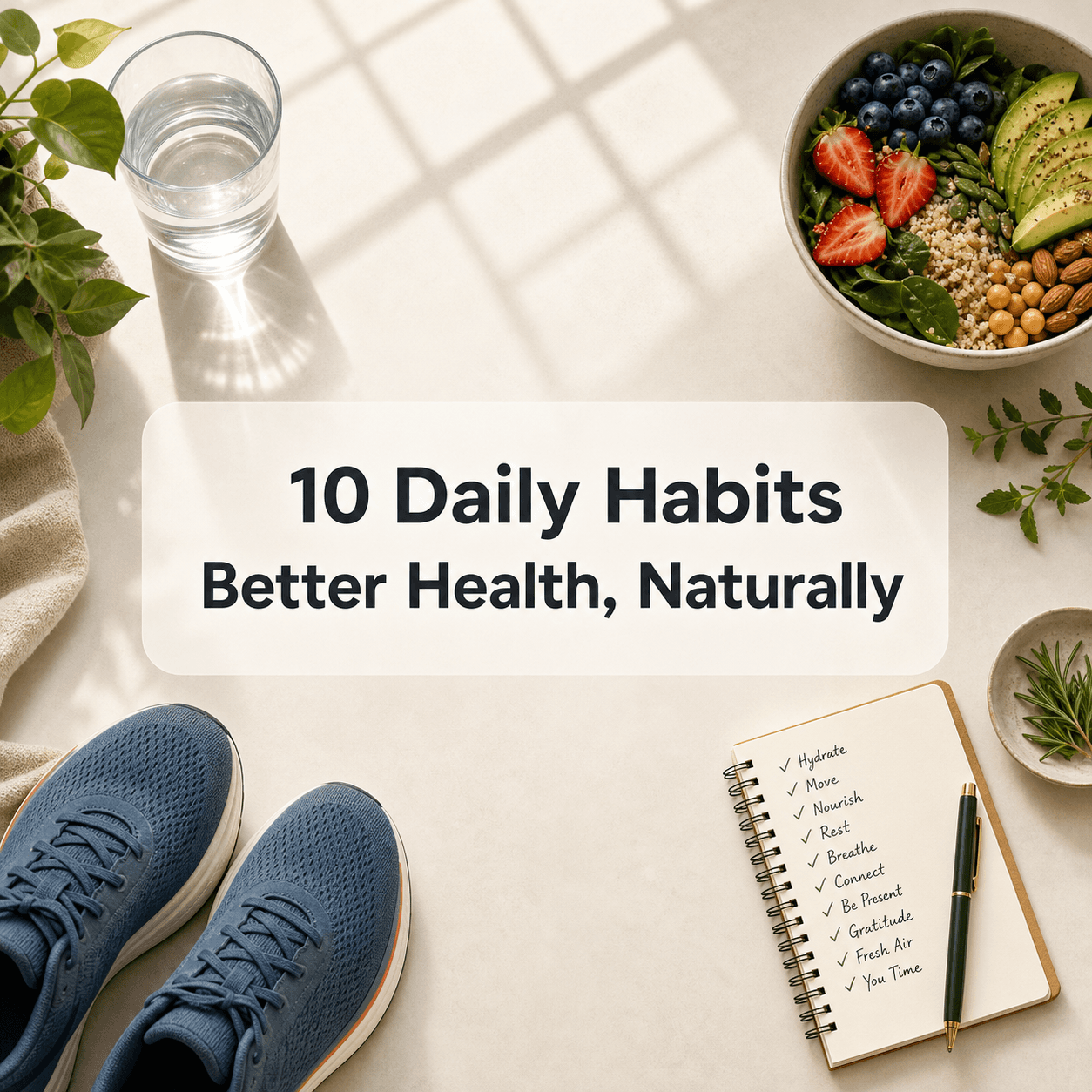
Here are 10 daily habits that actually move the needle, without weird detoxes or dramatic rules.
1. Drink water early, before you “earn” it
A lot of people go half the morning on caffeine and vibes. I get it. But if you wake up slightly dehydrated and then you add coffee on top, your body is basically starting the day playing catch up.
A simple habit that helps:
- Drink a full glass of water within 10 to 20 minutes of waking up.
- If you want, add a pinch of salt or a squeeze of lemon. Not required, but it can make it easier to drink and may help if you wake up feeling sluggish.
What it does, practically:
- Helps digestion start moving.
- Helps with morning headaches for some people.
- Makes you less likely to confuse thirst with hunger later.
If plain water feels boring, use a straw, use a bottle you like, make it cold. Make it stupidly easy.
2. Get 5 to 15 minutes of sunlight in your eyes (not through a window)
This sounds too simple, but it’s one of the highest return habits I know. Morning light helps set your circadian rhythm. That means better sleep timing later, better energy during the day, sometimes even better mood.
A good target:
- Step outside within an hour of waking up.
- 5 minutes on a bright day, 10 to 15 minutes if it’s cloudy.
No, you don’t have to stare at the sun. Just be outside, let your eyes take in daylight. Take your water with you. Two habits, one move.
If mornings are chaos, do it whenever you can. The earlier the better, but something beats nothing.
3. Move your body before you check your phone (or at least before you sit too long)
You don’t need a full workout every day. But you do need movement. Your body is built to move often, not to “exercise” once and then sit for 12 hours.
Try this:
- 3 to 5 minutes of movement right after the bathroom.
- A short walk.
- A few slow squats.
- A stretch routine that feels good.
- Even just marching in place while your coffee brews.
Then later, layer in “movement snacks” during the day:
- Stand up every hour.
- Walk for 2 to 3 minutes.
- Do 10 bodyweight movements. Pushups against a counter count.
The goal is circulation, joint motion, a little muscle engagement. You’ll feel more awake, and your back and hips will complain less. Quietly, but you’ll notice.
4. Build meals around protein and plants (most of the time)
If you want one nutrition habit that improves everything, it’s this: stop building meals around refined carbs first. Build them around protein and plants, then add carbs and fats as needed.
Why this matters:
- Protein helps with satiety, muscle maintenance, recovery, stable energy.
- Plants give you fiber, micronutrients, and support gut health.
- This combo usually reduces random snacking because you’re actually fed.
Simple daily target ideas:
- At least one palm sized serving of protein per meal.
- At least one fist of vegetables or fruit per meal.
Real world examples, not fantasy:
- Eggs plus spinach, plus toast.
- Greek yogurt plus berries, plus nuts.
- Chicken or tofu bowl with rice and mixed veggies.
- Lentil soup with a side salad.
- Tuna sandwich, but add a pile of tomatoes and cucumbers on the side.
You don’t need perfection. You need a default pattern you fall into most days.
5. Eat slower than you think you need to
A lot of “healthy eating” problems are speed problems.
When you eat fast, your brain gets the message late. Your stomach is full but your appetite hasn’t caught up yet, so you keep going. And if you’re stressed while eating, your digestion often acts weird later.
Try these small things:
- Sit down for at least one meal a day.
- Put your fork down sometimes. Even once or twice.
- Take a breath before you start eating, like a tiny reset.
- Chew a bit more than you normally do.
Also. If you’re always eating while scrolling, you’re basically training your brain to need stimulation to feel satisfied. And then food alone feels boring. That’s not great.
You don’t have to make every meal a mindful ceremony. But pick one meal to slow down. Usually dinner is easiest.
6. Walk daily, even if it’s broken into pieces
Walking is underrated because it’s not extreme. But it is one of the best “natural” health habits you can do.
Daily walking helps:
- Blood sugar regulation.
- Heart health.
- Joint mobility.
- Stress reduction.
- Sleep quality.
- Digestion, especially after meals.
If you want a simple approach:
- Aim for 20 to 40 minutes a day, total.
- Break it into 10 minutes after lunch, 10 minutes after dinner, and a short morning walk.
If you track steps, great. If you don’t, also great. The point is consistency.
One thing that helps a lot: a 10 minute walk after a meal. It’s not magic, but it’s close. If you only pick one walking habit, make it that.
7. Strength train in a very basic, repeatable way
You don’t need an intense program. You do need some resistance work if you want to age well, feel strong, and protect your joints.
Strength training supports:
- Muscle mass and bone density.
- Metabolic health.
- Posture and back health.
- Confidence, honestly. Feeling capable changes how you carry yourself.
Keep it boring. Boring is sustainable.
A simple weekly rhythm:
- 2 to 3 days per week of strength work.
- 20 to 40 minutes.
- Focus on big patterns: squat, hinge, push, pull, carry, core.
But this is an article about daily habits, so here’s the daily version:
- Do a small set every day. Literally 5 minutes.
- For example: 10 squats, 10 wall pushups, 20 second plank.
- Repeat 2 to 3 rounds if you feel good.
Some days you’ll do more. Some days you’ll do the minimum. The minimum still counts because it keeps the habit alive.
8. Take care of your gut with fiber, fermented foods, and regularity
Gut health gets hyped online in a way that can get weird. But the basics are not weird. They’re just… kind of unsexy.
Daily gut basics:
- Eat fiber. From beans, lentils, oats, fruit, veggies, chia, whole grains.
- Drink enough water so fiber can do its job.
- Include fermented foods if you tolerate them: yogurt, kefir, sauerkraut, kimchi, miso.
- Don’t ignore the fact that stress impacts digestion. It really does.
A quick practical target:
- Aim for 25 to 35 grams of fiber a day, if you can work up to it.
- If you’re currently low, increase slowly. Otherwise you will feel like a balloon. Not fun.
Also, regular meal timing and regular sleep help gut function. Your body likes rhythm.
9. Manage stress like it’s part of hygiene, not a luxury
Most people treat stress management like a bonus feature. Like, “when life calms down, I’ll meditate.”
Life doesn’t calm down.
So you need tiny daily stress habits that fit inside real life. Not a 60 minute ritual. More like a few small off ramps.
Try one or two of these:
- 2 minutes of slow breathing. Inhale 4 seconds, exhale 6 seconds. Do 5 rounds.
- A short walk without headphones.
- Journaling three messy lines. Not a full diary. Just: what’s on my mind, what do I need, what’s one next step.
- A quick stretch for your neck and shoulders.
- Text a friend something normal and human.
- Put your phone in another room for 20 minutes.
Stress is not only mental. It’s physical. Your nervous system lives in your body. If your shoulders are up to your ears all day, that’s a signal. Pay attention.
10. Sleep like it matters, because it does
You can eat perfectly and work out daily, but if you sleep badly all week, your health will feel wobbly. Sleep affects hunger hormones, recovery, immune function, mood, focus. Everything.
A few daily habits that improve sleep naturally:
- Keep a consistent wake time, even on weekends. This one is huge.
- Get morning daylight, which you already saw earlier. It makes nighttime sleep easier.
- Stop caffeine earlier than you think. For many people, after 12 pm is safer. For others, 2 pm. You have to test.
- Have a “wind down” cue. Something your body associates with sleep. Shower, light stretching, reading, dim lights.
Also. Put your phone away for the last 20 to 30 minutes if you can. Not because screens are evil. Mostly because scrolling is stimulating and time disappears. Then you sleep later than you meant to, and the cycle repeats.
If your brain races at night, do a brain dump. Write down everything you’re worried about and one small next action for each. You’re telling your brain, I’m not ignoring this, just not solving it at 1:12 am.
A simple way to actually stick with these
This part matters. Because a list is easy. Doing it is harder.
Here’s a low effort method that works:
- Pick 2 habits for the next 7 days.
- Make them so small you can’t talk yourself out of them.
- Attach them to something you already do.
Example:
- After brushing teeth: drink a glass of water.
- After lunch: 10 minute walk.
- After shutting laptop: 2 minutes of breathing.
- After dinner: prep tomorrow’s breakfast protein (yogurt, eggs, whatever).
Then next week, add one more. Or swap one out. The point is to build a baseline you can live with.
Not a temporary health sprint. A normal life that feels better.
Let’s wrap this up without pretending it’s easy
Health isn’t a punishment plan. It’s not “be good” Monday to Friday and then crash on the weekend.
It’s more like. Do a few simple things daily that make your body feel safe and supported. Water. Light. Movement. Protein and fiber. Sleep. Stress off ramps. Walking. Some strength.
If you do just three of these consistently, you will probably notice changes within a couple of weeks. More stable energy. Better digestion. Less stiffness. Better mood. A little more patience, which is underrated.
Start small. Keep it real.
And if today is messy, that’s fine. Do one tiny habit anyway. That counts too.
FAQs (Frequently Asked Questions)
Why is it important to drink water early in the morning before having caffeine?
Drinking a full glass of water within 10 to 20 minutes of waking up helps kickstart digestion, reduces morning headaches for some people, and prevents confusing thirst with hunger later. Starting your day hydrated is essential because waking up slightly dehydrated and then consuming coffee makes your body play catch-up.
How does getting sunlight in the morning benefit my health?
Getting 5 to 15 minutes of natural sunlight in your eyes (not through a window) within an hour of waking helps set your circadian rhythm. This leads to better sleep timing, improved energy during the day, and sometimes an enhanced mood. Even on cloudy days, spending time outside early in the day can provide these benefits.
What are easy ways to incorporate movement into my daily routine without a full workout?
Simple movements such as 3 to 5 minutes of stretching or slow squats right after using the bathroom, marching in place while your coffee brews, or taking short walks throughout the day can help. Additionally, standing up every hour and doing quick bodyweight exercises like pushups against a counter promote circulation and reduce discomfort from prolonged sitting.
How can building meals around protein and plants improve my nutrition?
Focusing meals on protein and plants rather than refined carbs first enhances satiety, supports muscle maintenance and recovery, stabilizes energy levels, provides fiber and essential micronutrients, and promotes gut health. This approach usually reduces random snacking because you feel more genuinely fed.
Why should I eat slower and how can I do it effectively?
Eating slower allows your brain to register fullness properly, preventing overeating. It also improves digestion by reducing stress during meals. To eat slower, sit down for at least one meal daily, put your fork down occasionally between bites, take a breath before starting to eat, chew more thoroughly, and avoid distractions like scrolling on your phone while eating.
What are the benefits of walking daily even if broken into smaller segments?
Daily walking supports blood sugar regulation, heart health, joint mobility, stress reduction, improved sleep quality, and better digestion. Even if you can’t walk for long periods at once, breaking it into smaller pieces throughout the day still provides significant natural health benefits.