





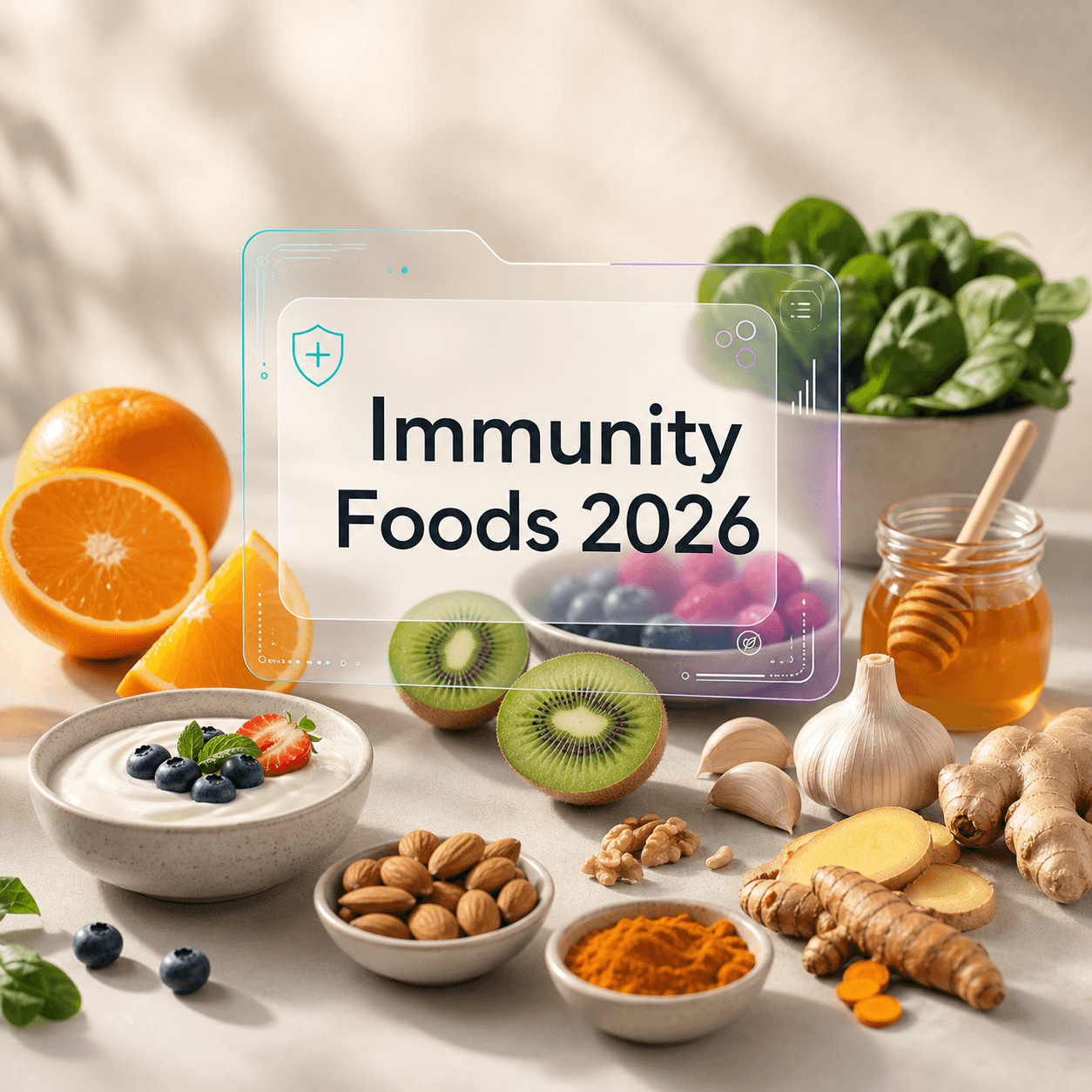
If there’s one thing I’ve noticed lately, it’s that people are tired.
Not just sleepy tired. More like… worn down. Busy. Stressed. Always one random sniffle away from losing a week.
So when someone asks “what should I eat to boost my immunity?” I get it. The annoying part is, most advice online is either too vague (eat healthy!) or too extreme (drink this neon green thing twice a day forever).
The truth is calmer than that.
Your immune system isn’t a single switch you flip. It’s this whole network. Gut. Sleep. Stress hormones. Nutrients. The food you eat daily, not the “immunity shot” you take once and forget about.
So here are the best foods to focus on in 2026, in a real world way. Stuff you can actually buy, cook, and repeat. And no, you don’t need to eat all of them. Pick a handful you like and make them regular.
First, what “boosting immunity” actually means
Quick reality check.
A stronger immune system isn’t always better. You don’t want your immune system “overreacting” either. What you want is a well fed, well regulated immune response.
That usually looks like:
- Getting enough protein to build immune cells and antibodies
- Enough micronutrients (especially zinc, iron, selenium, vitamins A, C, D, E, B6, B12, folate)
- Enough fiber and fermented foods to support your gut microbiome
- Enough omega 3s to help with healthy inflammation balance
- And fewer ultra processed foods that crowd out nutrient dense meals
Ok. Now the food list.
1. Citrus fruits (but also kiwi, berries, guava)
Everyone knows oranges. Fine. But citrus is just one slice of the vitamin C world.
Vitamin C supports immune function in a bunch of ways, including helping immune cells do their job and supporting the skin barrier. It’s not a magic shield, but it’s one of those nutrients where “consistently enough” matters.
Good picks:
- Oranges, grapefruit, lemons, limes
- Kiwi (quietly one of the best)
- Strawberries, blackberries, blueberries
- Guava (if you can get it, it’s stacked)
How to actually eat it without making it a project:
- Add kiwi or berries to yogurt
- Have an orange after lunch instead of dessert
- Squeeze lemon on beans, fish, or salad
- Frozen berries in a smoothie if fresh is expensive
Little note. Vitamin C is water soluble. You don’t “store” it well. So small daily intake beats occasional mega doses.
2. Garlic (the cheap, boring immune MVP)
Garlic has a reputation for a reason. It contains sulfur compounds (like allicin) that have been studied for antimicrobial and immune support effects.
But here’s the part people miss. You need to prepare it in a way that actually forms those compounds.
The simple trick:
- Chop or crush garlic
- Let it sit 5 to 10 minutes
- Then cook it
That pause matters. Yeah it’s annoying, but it’s also easy once you know.
Ways to use it daily:
- Garlic in eggs
- Garlic in soups
- Garlic sautéed with spinach
- Garlic in lentils
- Garlic mixed into yogurt with salt and lemon as a quick dip
If you hate garlic breath, I get it. Use roasted garlic. It’s milder, still useful, and honestly kind of addictive.
3. Yogurt and kefir (for the gut, which is basically mission control)
A lot of your immune activity is connected to your gut. The gut lining, the microbiome, all the signaling that happens there.
That’s why fermented foods get recommended so often. Not because they’re trendy. Because they’re practical.
Best options:
- Plain yogurt with live cultures
- Kefir (often more diverse cultures than yogurt)
- Traditional buttermilk in some cultures
- Skyr is fine too, though culture variety varies by brand
What to look for:
- “Live and active cultures” on the label
- Minimal added sugar (ideally plain)
How to make it taste good without turning it into dessert:
- Add berries and a pinch of cinnamon
- Add chopped apple and walnuts
- Add cucumber, salt, garlic, and lemon for a savory bowl
- Use kefir as a smoothie base
If you’re dairy sensitive, don’t force it. Try fermented vegetables instead (we’ll get to that).
4. Mushrooms (especially shiitake, maitake, oyster)
Mushrooms are having a moment, and some of it is marketing fluff. But mushrooms really do contain beta glucans and other compounds studied for immune modulation.
Not “boosting” like a pre workout. More like supporting immune readiness.
Great choices:
- Shiitake
- Maitake
- Oyster
- Button and cremini are still good, just usually lower in some compounds
Easy ways to eat more:
- Add mushrooms to omelets
- Toss into stir fries
- Roast on a sheet pan with olive oil and salt
- Add to soups, especially miso soup
One underrated move. Dried shiitake. Keep a bag, rehydrate, use the soaking liquid in soups. Instant depth.
5. Fatty fish (salmon, sardines, mackerel)
Omega 3 fats are involved in inflammation regulation. And inflammation is part of immune response. The goal is not “no inflammation”. The goal is appropriate inflammation, then resolution.
Fatty fish also brings:
- Vitamin D (in some types)
- Selenium
- High quality protein
Best picks:
- Salmon (fresh or canned)
- Sardines (cheap and nutrient dense)
- Mackerel
- Herring
Simple meal ideas:
- Canned salmon mixed with yogurt, mustard, salt, pepper
- Sardines on toast with lemon
- Salmon with rice and a heap of vegetables
- Mackerel in a salad
If fish isn’t your thing, you can look at algae based omega 3 supplements, but since this article is about foods… I’ll just say, try sardines once with lemon and hot sauce before you decide.
6. Eggs (protein, selenium, choline, and just… convenience)
Eggs are not an “immunity” food in the TikTok sense. They’re just a very efficient way to get nutrients your immune system uses.
Eggs provide:
- Complete protein
- Selenium
- Vitamin A (small but meaningful)
- B12 and other B vitamins
- Choline (important for cell membranes and signaling)
Easy ways to make eggs less boring:
- Soft scramble with spinach and garlic
- Boiled eggs with salt and pepper as a snack
- Omelet with mushrooms
- Egg fried rice with frozen peas and carrots
If you’re short on time and money, eggs are one of the simplest upgrades you can make.
7. Legumes (lentils, chickpeas, beans)
Legumes help immunity in a less flashy way. Fiber. Prebiotics. Minerals. Steady energy. They support the gut microbiome, which supports immune regulation.
They also bring:
- Folate
- Iron (non heme)
- Zinc (some)
- Protein
- Resistant starch
Best picks:
- Lentils (cook fast, easy)
- Chickpeas
- Black beans
- Kidney beans
- Any local beans you already eat
How to eat more without feeling like you’re eating “health food”:
- Add lentils to soups
- Make a quick chickpea salad (olive oil, lemon, salt, onion)
- Add beans to tacos
- Blend chickpeas into hummus and use it like a spread
If beans mess with your stomach, start small. Rinse canned beans well. Increase slowly. Your gut usually adapts.
8. Leafy greens (spinach, kale, arugula, moringa)
Greens are loaded with vitamins and plant compounds that support immune health, including vitamin A precursors, folate, vitamin K, and lots of polyphenols.
The trick is not to buy a giant box of spinach and watch it die in your fridge.
Do this instead:
- Frozen spinach. Seriously.
- Or buy smaller amounts more often.
- Or cook your greens the day you buy them.
Great greens:
- Spinach
- Kale
- Swiss chard
- Arugula
- Moringa leaves (fresh or powder, depending where you live)
Easy ways:
- Stir frozen spinach into dal, soup, pasta sauce
- Sauté greens with garlic and olive oil
- Add arugula to sandwiches
- Blend a handful into smoothies (you won’t taste it much)
9. Nuts and seeds (especially pumpkin seeds, almonds, walnuts)
Nuts and seeds bring vitamin E, zinc, selenium, and healthy fats.
Vitamin E matters because it’s an antioxidant that supports immune cell function. Zinc matters because it’s involved in development and function of immune cells.
Top picks:
- Pumpkin seeds (zinc)
- Almonds (vitamin E)
- Sunflower seeds (vitamin E)
- Walnuts (omega 3 ALA)
- Brazil nuts (selenium, but don’t overdo it)
Practical ways:
- Add pumpkin seeds to yogurt
- Keep almonds in your bag
- Sprinkle sunflower seeds on salads
- Mix walnuts into oats
Quick caution with Brazil nuts. Selenium is great. Too much selenium is not great. One or two nuts a day is plenty for most people.
10. Colorful vegetables (bell peppers, carrots, sweet potato)
If you only eat beige food, your immune system is probably not thrilled.
Color in plants usually means different antioxidants and phytonutrients. And a lot of immune support is about reducing nutrient gaps and supporting barriers like skin and mucosa.
Best ones:
- Red bell peppers (also high in vitamin C)
- Carrots (beta carotene, vitamin A precursor)
- Sweet potatoes (same idea, plus fiber)
- Tomatoes
- Broccoli and cauliflower
Ways to keep it easy:
- Roast a tray of mixed vegetables once or twice a week
- Keep baby carrots around
- Buy frozen mixed vegetables for weeknights
- Use bell peppers in eggs, stir fries, wraps
11. Ginger and turmeric (helpful, but don’t turn it into a religion)
Ginger and turmeric are popular for anti inflammatory and antioxidant properties. They can support overall health, and they’re nice in routine.
But… they’re not a replacement for protein, sleep, or basic nutrition. They are add ons.
How to use them without the “wellness performance”:
- Ginger in tea when you actually want tea
- Ginger grated into stir fries
- Turmeric in curry, lentils, rice
- Add black pepper with turmeric to support absorption of curcumin
If you do golden milk and love it, great. Just keep the sugar low.
12. Oats (beta glucan fiber for gut and immune support)
Oats are another quiet winner. They contain beta glucans too, which can support immune function, and they help feed gut microbes.
Also they’re cheap. And filling.
Easy upgrades:
- Oats with yogurt and berries
- Oats with chia seeds and cinnamon
- Savory oats with egg, spinach, and garlic (sounds weird, tastes good)
If you’re gluten sensitive, make sure the oats are certified gluten free.
13. Fermented vegetables (kimchi, sauerkraut, pickles, idli dosa batter)
If dairy based probiotics aren’t for you, fermented vegetables and fermented batters can fill the gap.
Good options:
- Kimchi
- Sauerkraut
- Naturally fermented pickles (not vinegar only)
- Miso (also fermented, more on that in a second)
- Traditional fermented batters like idli or dosa
How to use:
- A few forkfuls of kimchi with rice and eggs
- Sauerkraut on sandwiches
- Miso soup as a quick starter
- A small serving daily is enough, you don’t need a mountain
One note. If you have high blood pressure, watch sodium. Still, small portions can work.
14. Miso (and other soy foods like tempeh)
Miso is fermented, and it’s also just a really easy way to make a meal taste like you tried.
It contains beneficial compounds and can support gut health.
Simple miso soup:
- Warm water or broth
- Add mushrooms, tofu, seaweed if you want
- Turn off the heat
- Stir in miso paste at the end (don’t boil it hard)
Other soy foods that can help:
- Tempeh (fermented, high protein)
- Tofu (not fermented, but high protein and easy)
If you’re trying to increase protein without relying only on meat, tofu and tempeh are genuinely useful.
15. Bone broth and soups (not magic, but smart)
Soup is underrated for immunity because it’s easy to eat when you feel off, it hydrates you, and it can carry a lot of nutrients if you build it well.
The “immunity” part comes from what you put in it:
- Protein (chicken, beans, tofu, lentils)
- Garlic and ginger
- Vegetables
- Salt in reasonable amounts for hydration
- Mushrooms, if you like
A good soup is basically a delivery system for the stuff your immune system uses.
If you like bone broth, fine. Just don’t let it replace actual meals. Broth alone is not enough.
A simple “immunity plate” you can repeat
If you want a quick formula that doesn’t require tracking every vitamin:
- Protein: eggs, fish, yogurt, tofu, beans
- Fiber: beans, oats, vegetables, berries
- Fermented: yogurt, kefir, kimchi, miso
- Color: at least 2 different colored plants daily
- Healthy fats: olive oil, nuts, seeds, fatty fish
That’s it. Mix and match.
Example day that’s not insane:
- Breakfast: yogurt + berries + pumpkin seeds
- Lunch: lentil soup with spinach and garlic + orange
- Dinner: salmon (or tofu) + roasted sweet potato + sautéed mushrooms
- Snack: almonds or boiled eggs
Not perfect. But strong.
The stuff that quietly wrecks your immune routine
This is the part nobody wants to hear, but it matters.
Even if you eat garlic and berries, these things can drag you down:
- Not enough protein overall
- Too little sleep, consistently
- Chronic stress and no downtime
- Too much alcohol
- Ultra processed foods replacing real meals
- Not enough calories (especially if dieting hard)
Food helps. But it can’t fully compensate for a lifestyle that keeps your body in “survival mode”.
It’s essential to combat chronic stress as it significantly impacts your immune system.
Quick shopping list (if you want to start this week)
If you buy nothing else, buy these and you can build a lot:
- Eggs
- Plain yogurt or kefir
- Garlic + ginger
- Frozen berries
- Frozen spinach
- Lentils or canned beans
- Oats
- Canned sardines or salmon (or tofu)
- Mushrooms (fresh or dried)
- Pumpkin seeds or almonds
- Kimchi or sauerkraut (optional, nice)
That’s a very workable base.
Let’s wrap this up
Boosting immunity in 2026 isn’t about chasing a single superfood. It’s more like building a routine your body can rely on.
If I had to pick the biggest needle movers from this whole list, the ones that show up again and again in real life, it would be:
- Protein you actually eat consistently (eggs, fish, yogurt, beans, tofu)
- Fermented foods for gut support (yogurt, kefir, kimchi, miso)
- Fiber and color (legumes, oats, berries, leafy greens, peppers, sweet potatoes)
- And the basics like garlic, nuts, seeds
Pick 5 to 7 of these foods you genuinely like. Make them boring. Make them repeatable. That’s where the benefit comes from.
Not from a one-time cleanse. Not from panic buying supplements.
Just food. Regularly.
FAQs (Frequently Asked Questions)
What does ‘boosting immunity’ really mean?
Boosting immunity means supporting a well-regulated immune response rather than simply making it stronger. This involves getting enough protein to build immune cells and antibodies, sufficient micronutrients like zinc, iron, selenium, and vitamins A, C, D, E, B6, B12, folate, enough fiber and fermented foods to support the gut microbiome, adequate omega-3s for healthy inflammation balance, and reducing ultra-processed foods that crowd out nutrient-dense meals.
Which foods are best to eat regularly to support immune health in 2026?
Focus on real-world foods you can buy and cook regularly such as citrus fruits (oranges, kiwi, berries, guava), garlic prepared properly (chopped/crushed then rested before cooking), yogurt and kefir with live cultures and minimal added sugar, mushrooms like shiitake and maitake rich in beta glucans, and fatty fish like salmon and sardines for omega-3 fats that help regulate inflammation.
How should I prepare garlic to maximize its immune-supporting benefits?
To activate garlic’s beneficial sulfur compounds like allicin, chop or crush the garlic first and then let it sit for 5 to 10 minutes before cooking. This simple pause helps form the active compounds. You can add garlic to eggs, soups, lentils or sauté it with vegetables. If you dislike garlic breath, roasted garlic is milder but still effective.
Why are fermented foods like yogurt and kefir important for immunity?
Fermented foods support your gut microbiome which plays a central role in immune function. Yogurt and kefir contain live cultures that help maintain a healthy gut lining and immune signaling. Choose plain varieties with live cultures and minimal added sugar. You can enjoy them with fruits or savory additions like cucumber and lemon. If you’re dairy sensitive, fermented vegetables are a good alternative.
What role do mushrooms play in supporting the immune system?
Mushrooms such as shiitake, maitake, and oyster contain beta glucans and other compounds studied for their ability to modulate immune readiness—helping your immune system respond appropriately rather than overreacting. They can be easily added to meals like omelets, stir-fries, soups or roasted as a side dish. Dried shiitake mushrooms are especially convenient for adding flavor and nutrients.
How do omega-3 fatty acids from fatty fish affect immunity?
Omega-3 fats found in fatty fish like salmon, sardines, and mackerel help regulate inflammation which is a key part of the immune response. The goal is not to eliminate inflammation but to maintain a healthy balance so your immune system functions properly. Including these fish regularly supports this balanced inflammatory response essential for good immunity.